Service description
WATER DRILLING | BOREHOLES DRILLING IN KENYA | WATER WELLS IN KENYA
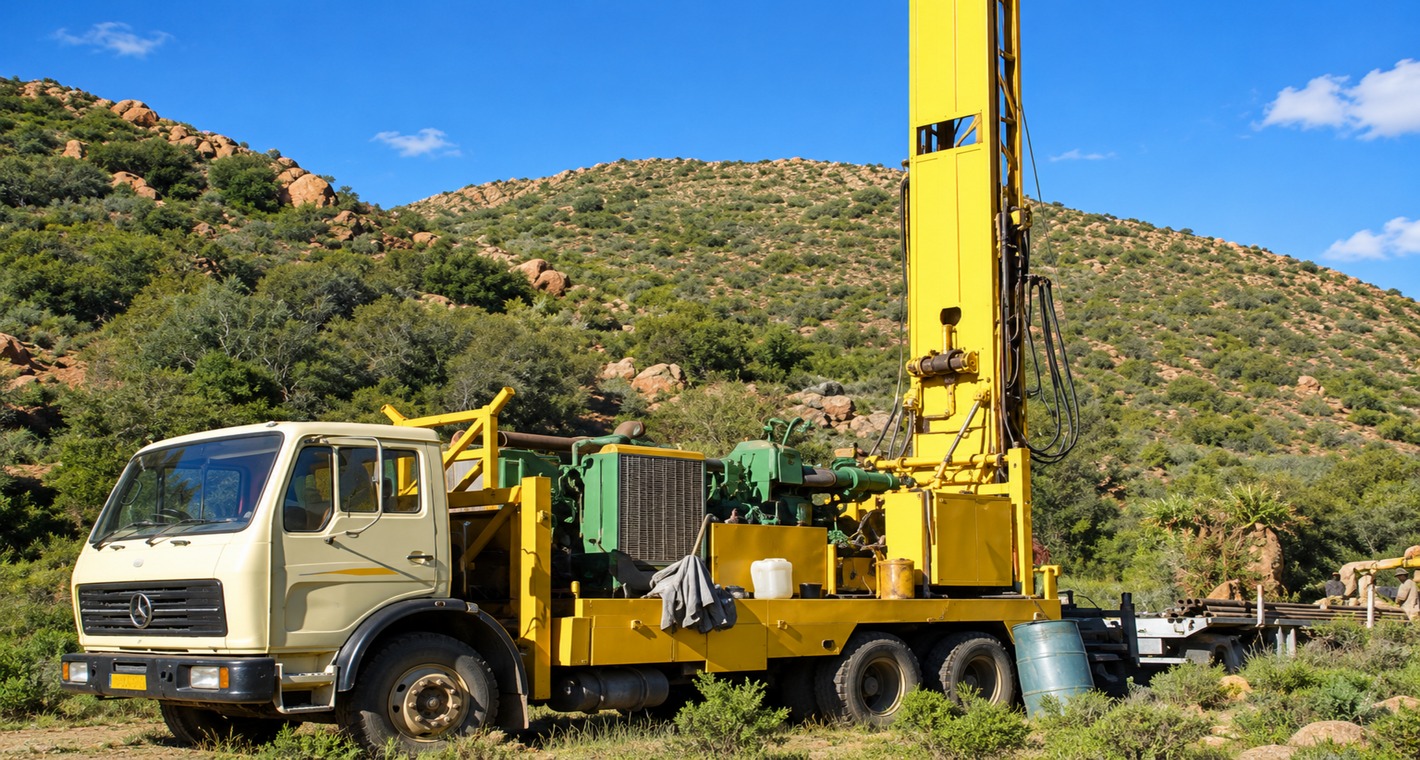
Drilling Water Boreholes in Kenya
Borehole drilling in Kenya is an important solution for securing reliable groundwater for domestic water supply, agriculture, irrigation, livestock, commercial developments, institutions and industrial use.
A successful borehole project involves more than drilling. It requires hydrogeological investigation, regulatory approvals, drilling, borehole construction, development, yield testing, water quality analysis, equipping and commissioning.
1. Borehole drilling process
-
Site assessment: Evaluate the proposed site, geological formations and groundwater potential.
-
Hydrogeological survey: Engage a qualified hydrogeologist to identify suitable drilling locations and estimate likely groundwater conditions.
-
Regulatory approvals: Obtain the required permits and authorisations before drilling.
-
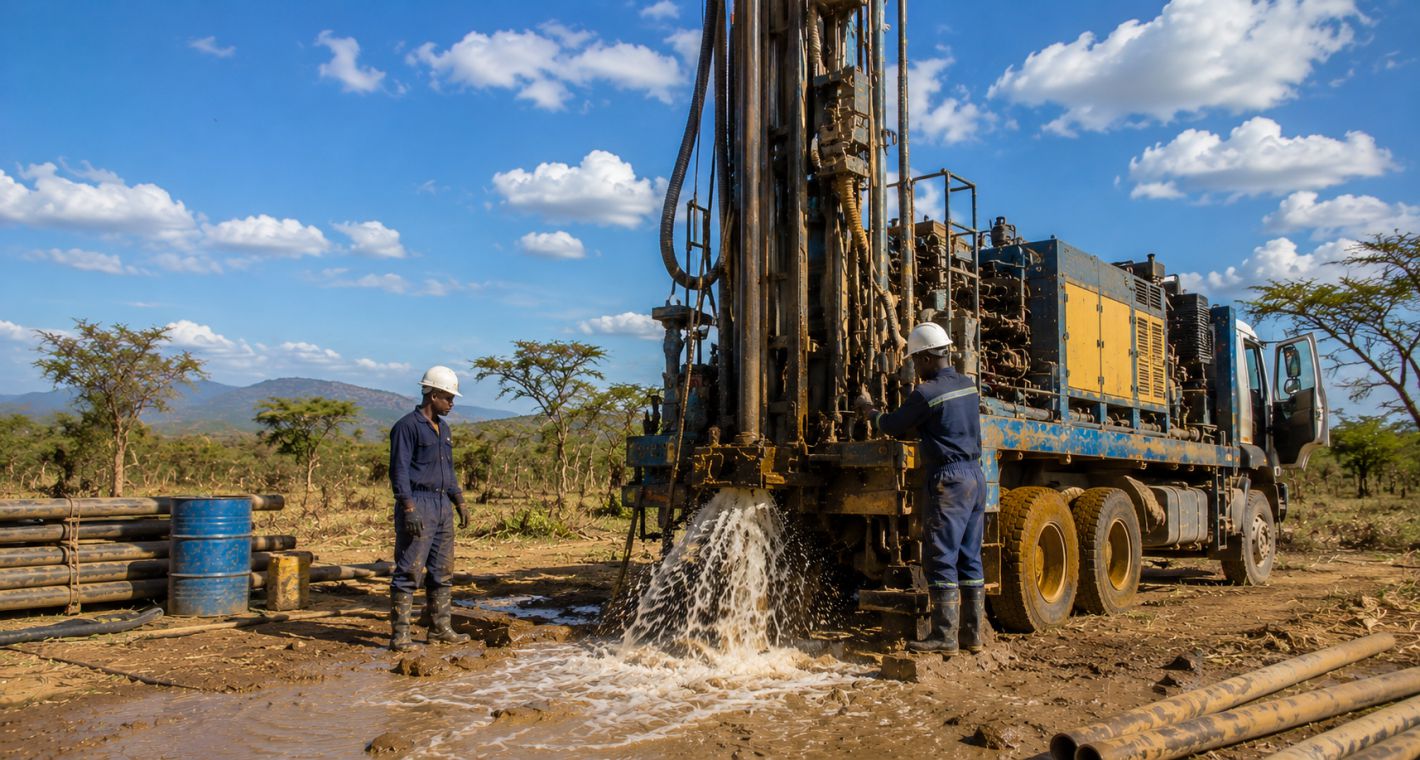
Borehole drilling: Drill to the required depth using suitable rotary or down-the-hole hammer equipment.
-
Casing and screen installation: Install suitable casing, screens and gravel pack where required by the geological formation.
-
Borehole development: Remove drilling fluids, fine sediments and debris.
-
Pumping tests: Establish borehole yield, drawdown and recovery characteristics.
-
Water quality testing: Analyse samples to establish suitability for the intended use.
-
Equipping and commissioning: Install the appropriate pump, rising main, electrical or solar system and storage connections.
2. Estimated borehole drilling costs in Kenya (2026)
Costs depend on county, geological formation, drilling method, depth, casing requirements, mobilisation and pumping equipment.
Indicative published market estimates include:
A 100-metre borehole could cost approximately KSh 800,000–1,300,000 or more when drilling, casing and basic equipping are considered. Storage tanks, elevated towers, long distribution pipelines and extensive solar systems may increase the budget considerably. Obtain a site-specific quotation before committing.
3. Regulatory requirements in Kenya
The main regulatory institution is the Water Resources Authority (WRA).
The project should address:
-
Hydrogeological assessment by a qualified professional.
-
WRA authorization to construct the borehole.
-
Applicable environmental approvals from NEMA.
-
Drilling by an appropriately licensed contractor.
-
Supervision by qualified water-resource professionals.
-
Borehole completion records and pumping-test documentation.
-
Water quality laboratory analysis.
-
WRA water-use permit where required before abstraction.
WRA outlines the authorisation, construction inspection and water-use permitting process.
|
Item |
Indicative cost |
|---|---|
|
Hydrogeological survey |
KSh 35,000–90,000 |
|
Air rotary drilling and associated works |
KSh 5,000–9,500 per metre |
|
Mud rotary drilling in loose formations |
Can exceed KSh 15,000 per metre |
|
Electric submersible pump and installation |
From KSh 450,000 |
|
Solar pumping system |
From KSh 650,000 |
Boreholes come in various sizes depending on various factors such as;
- Geographical location
- Rock porosity
- Economic factors such as income etc.
Geographical Location
Terrain and location determine drilling depth, accessibility, and overall project requirements.
Rock Porosity
Rock formation affects groundwater availability, drilling difficulty, and borehole yield.
Economic Factors
Budget influences drilling depth, equipment selection, and overall project scope.
We have various quotations for drilling boreholes depending on the above factors. For us to offer you services of borehole drilling in East Africa, please do contact us.
- Borehole water wells drilling costs
- Contact us
- Water Drilling in Kenya
More Services
- 01.Greenhouse Solutions | Best company for supply of greenhouses in East Africa
- 02.Water drilling in Kenya | Boreholes drilling company
- 03.AGRO- Supply of commodities such as Herbs and spices, Nuts, seeds and fruits
- 04.Consumer Products
- 05.Afforestation
- 06.Fish Pond Construction
- 07.Dam Construction, Rehabilitation & Design
- 08.Greenhouses construction in East Africa
- 09.Greenhouses selling | greenhouse technology from Kenya