
How to Grow Tomatoes in a Greenhouse
One aspect every farmer should know is that organically grown produce always tastes better than store-bought produce. Greenhouse tomato farming in Kenya can help farmers produce healthy, high-quality tomatoes in a controlled environment. Learning how to grow tomatoes in a greenhouse involves choosing the right tomato varieties, preparing suitable soil, providing proper nutrition and managing temperature and humidity.
Effective greenhouse tomato growing also requires careful attention to flowering and pollination. For an indoor garden, choose a crack-resistant variety, as these tomatoes tend to perform well under controlled conditions and are often suitable for making sauces and tomato paste.
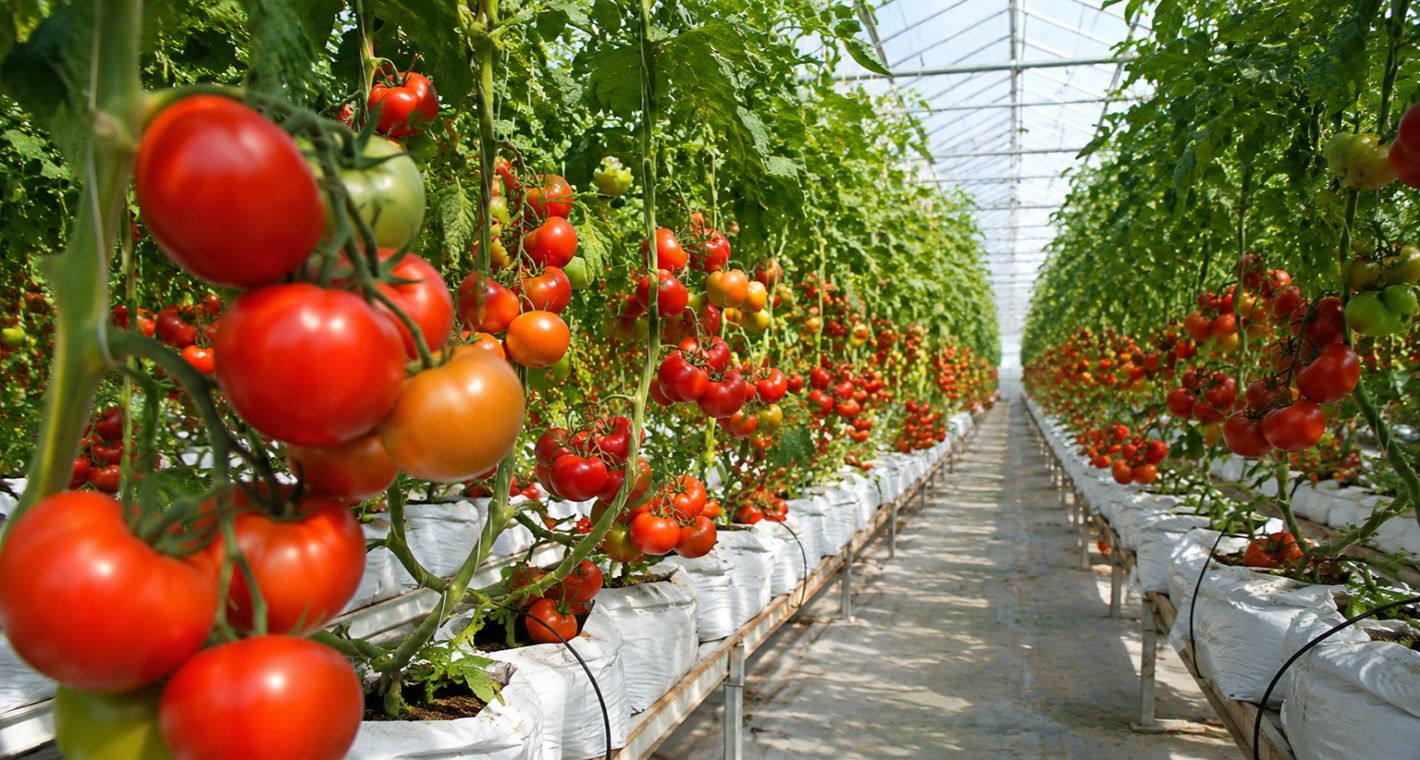
How to Grow the Best Tomatoes Under Greenhouse Farming
01.
Prepare a Quality Soil Mix
Use a standard potting soil mix with about 10% worm castings added. Standard potting soil is usually equal parts perlite, vermiculite, and sphagnam peat and is adjusted to the right Ph by adding 1 teaspoon of hydrated lime for every gallon of soil mix. Ph adjusting your mix this way for tomatoes is good because the lime is a good source of calcium, which prevents blossom end rot in tomatoes later on. Moisten the initial mix little by little, using plain water. The mix is just right when you squeeze a handful and get a few drops out of it.
02.
Start your seeds
Start with a regular nursery tray full of your soil mix. Tomato seeds should be planted 1/4 inch deep, and about 8 seeds/inch. You may want to cover them for the first few days to keep them from drying out. Tomato seeds germinate best at 80 degrees, and should be mostly up in 5 to 12 days. Remove any cover you may have on them as soon as they begin popping up. The fresh sprouts should be kept 4 to 6 inches under a fluorescent light. The light should be kept on 18 to 24 hours a day. When they are 1 1/2 inches tall, carefully transplant them into their own 6 inch containers.
03.
Keep the tomatoes under 2 or 3 fluorescent lights for 18-24 hours daily.
Feed them Maxsea 16-16-16 at this point, although they could probably use even more nitrogen (the first number). The strength of the solution is about 600 ppm, which is 1 rounded teaspoon of Maxsea/gallon. Add 10 ml/gallon Thrive Alive B1. The ideal temperatures for growth are 70-75 degrees during the day and 65-67 degrees at night.
When the plants reach 12 inches or more, they may need transplanting to one gallon containers. After 6 or 8 weeks, your plants should be just about ready to begin fruiting them.
04.
Be familiar with how to force flowering in plants
Some tomatoes flower in 60 days and others take up to 80 days, beginning from the time you force flowering. Just as you begin this process, you want to make your final transplant into 3 gallon containers. For the first two weeks, you want to feed them heavy with a 10-52-70 or similar fertilizer.
Each time they need water, give them food also at 800 ppm, which would be a little over half of the recommended “full strength” on the directions. Keep in mind you are feeding them each time you water them. For the rest of the season, feed them 16-16-16 or similar at 800 ppm.
05.
Polinate the flowers everyday while it is warm and humid
Ideally, the humidity will be 65 to 70 percent. Greenhouse growers usually do this between 11:30am and 12:30pm (basically noon) when these conditions occur naturally. For them, early and late day pollination often will not produce proper crops. The tomato flower consist of two parts. The male anthers will drop the pollen. The female carpels will catch the pollen. The resource link below includes pictures of both and of tomato flower pollination.
Most male anthers produce their pollen on the outsides of the anthers, making it easy to release pollen into the wind for pollination. In the tomato plant, however, pollen is produced internally, as if trapped in a straw. This is the biggest problem for tomato pollination. The plant needs vibration at the right frequency, such as the buzzing of a bees wings, to dislodge and release the pollen.
Grow More with Green Tec
Green Tec has best deals for greenhouses and drip kits in Kenya. Please contact us for a quotation.